Deontay Wilder v. Alexander Povetkin
On Saturday, May 14, 2016, ESPN announced
36-year-old boxing challenger, Alexander Povetkin (31-1),
tested positive for the banned steroid, meldonium, which is
a commonly used heart drug in his native Russia. Povetkin
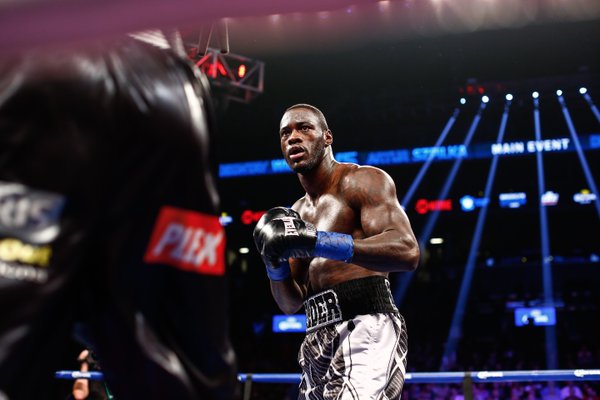
was scheduled to fight undefeated 30-year-old WBC
heavyweight champ, Deontay Wilder (36-0), on May 21, 2016 in
Moscow, Russia. In the weeks leading up to the fight,
Alabama native, Wilder, even billed the bout the new Rocky
IV on his social networking pages. Ironically, in more ways
than one. Povetkin has become a real live Drago.
The WBC has announced today that in light of
the Povetkin's positive drug test, the fight has been
postponed. Prominent figures in boxing are stating the fight
should be cancelled, not postponed and Povetkin handed a
ban. Wilder's promoter is looking into a potential lawsuit,
as a $5,000,000 purse is at stake and Povetkin is liable.
Wilder's manager Jay Deas has told the press the fight is
not postponed, but cancelled, which prompted Povetkin's
promoter to threaten a lawsuit.

Alexander Povetkin
It's sad to have to cancel a fight,
especially with a large number of tickets already sold.
Russian fans and others around the world who purchased
tickets to fly to Moscow to see the bout that was scheduled
for this Saturday, will be disappointed, but there are valid
issues regarding Povetkin that warrant a cancellation.
Meldonium gives athletes an undue advantage.
It increases endurance, stamina and strength. The mere fact
Povetkin tested positive for meldonium, means his body is
still benefiting from the drug. Povetkin's January 2016 drug
test came back clean. However, Povetkin's April 2016 drug
test came back positive for meldonium, which means it was
ingested recently during training camp.
Deontay Wilder
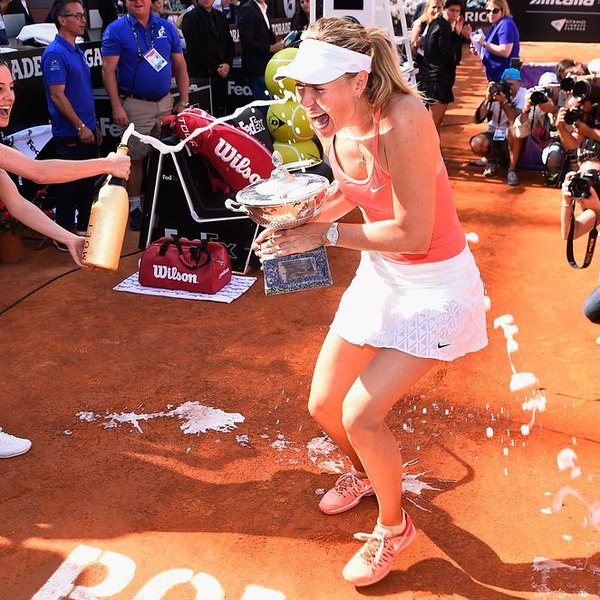
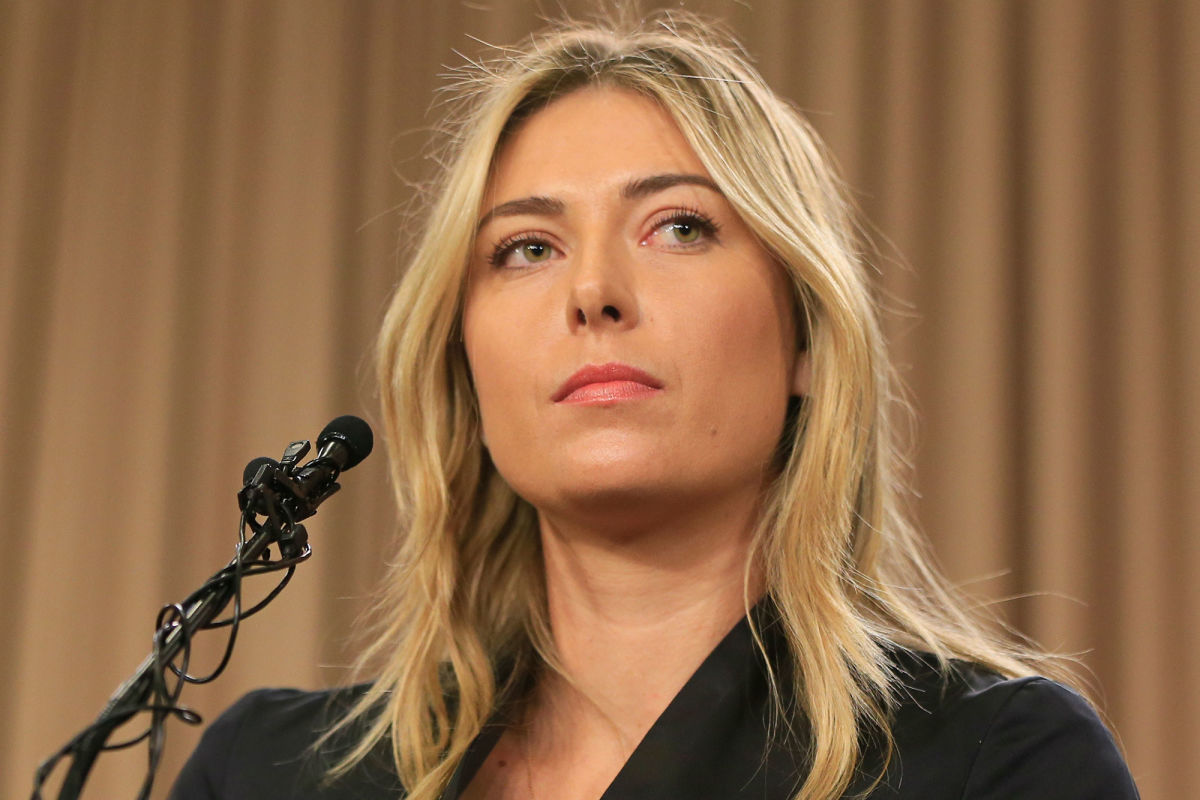
In March 2016, 29-year-old tennis star Maria
Sharpova, tested positive for meldonium. Sharapova, a
resident of Florida since age 7, was taking the drug for
most of her adult career (for the past 10-years) and stated
she was unaware it was banned in January 2016. However, it
has been stated, tennis players were warned 5-times in
writing (emails) that meldonium is banned as of January 1,
2016. Sharapova, who is barred from playing tennis, is now
awaiting word on how long she will be banned, pending an
appeal. Meldonium is not approved for any type of use in
America. However, it can be lawfully purchased in Russia.
Sharapova has many multi-million dollar
endorsements with companies such as Nike, Porsche and Tag
Heuer, which have already been revoked in light of the
positive drug test. Tennis players are not expressing
sympathy for her plight, with rival Jennifer Capriati
stating Sharapova should be stripped of her 35 tennis
titles. Even ex-boyfriend Andy Roddick has stated Sharapova
should receive a ban.
Maria Sharapova
If one does not have heart problems, it is
not a good idea to take the drug. Long term effects on
healthy patients is currently unknown by medical science.
More investigation is needed regarding comparative studies
with proper control groups. Meldonium could lead to cancer
and or heart problems, among other things, for disrupting
the body's natural mechanisms, when no illness is present.
As state above, meldonium increases
strength, stamina and endurance, which means the heart is
working harder than it normally would, via increased levels
of hyperactivity, if the drug was not present in the healthy
person's system. This risk is multiplied in a heavyweight,
as the heart already works harder in larger people. Speeding
up its processes with an artificial drug, magnifies any
negative effects. One of them being an enlarged heart, which
if left unchecked can lead to an early death.
Maria Sharapova
Heart patients know they are barred from
overexerting themselves, engaging in strenuous physical
activity and must be cautious of stair climbing, due to the
negative effect these acts can have on a damaged heart. An
athlete will do all those things in training and practice
for several hours per day, on average 5 days a week (weight
lifting, stair climber and running for miles). Therefore,
the risks are compounded.
If you pay attention to the ages of steroids
using wrestlers who have suddenly died at early ages from
heart attacks, many of them are in their 40s and 50s, which
is usually the age heart disease begins to kick in for
people who engaged in practices detrimental to their health
(cocaine, smoking cigarettes ect). Once again, proper
studies need to be conducted, factoring in age, weight,
lifestyle and period of time the drug was ingested by each
subject and in what quantity, to gain accurate answers.
Either way, if you aren't sick, you shouldn't be taking
pharmaceutical drugs, as fundamentally it is not a good
idea.
STORY SOURCE
Two reports assert Alexander Povetkin took meldonium
after ban
6:38 PM ET - While the fight between
heavyweight titleholder Deontay Wilder and mandatory
challenger Alexander Povetkin hangs in the balance after
Povetkin's positive test for the banned substance meldonium,
the assertion from Povetkin's promoter that it was in his
system only because he took it late last year -- before it
was banned -- appears untrue.
After ESPN first reported on Friday that
Povetkin tested positive for meldonium in an April 27 urine
test conducted by the Voluntary Anti-Doping Association in
Chekhov, Russia, promoter Andrey Ryabinsky of World of
Boxing told the Russian TASS news agency that "traces of
extremely low concentration of meldonium have been found in
his blood. He consumed it in September last year. He has not
taken it since Jan. 1. The situation is ambiguous. The blood
sample was taken in April this year. We have been in contact
with the World Boxing Council, which is to decide if
Povetkin's boxing bout against Deontay Wilder will take
place or not."
However, ESPN.com has obtained two separate
written reports sent by VADA's president, Dr. Margaret
Goodman, to both camps as well as the WBC, whose title
Wilder holds, notifying them that Povetkin was negative for
any banned substances in VADA-conducted tests on April 7,
April 8 and April 11. So Povetkin, who has yet to ask for
his B sample to be tested, apparently used meldonium between
April 11 and his positive test on April 27. The letter
Goodman sent disclosing the negative results on April 7 and
April 8 was sent on April 21. The letter confirming the
negative results on April 11 was sent on April 30.
"The information you have obtained is
accurate," promoter Lou DiBella, who represents Wilder, told
ESPN.com on Saturday. "It also contradicts the public
statements made by Mr. Ryabinsky attempting to excuse
Povetkin's positive result. If there was a trace amount from
2015 in his system, it would have shown up in the other
three tests in April that preceded the positive result.
"This is a very serious PED because it wasn't on the (World
Anti-Doping Agency) banned list until Jan. 1. This is the
type of PED that results in extremely elevated stamina and a
fighter performing like the Energizer bunny."...
6:53 AM ET - Heavyweight titleholder Deontay
Wilder's defense against mandatory challenger Alexander
Povetkin was called off Sunday in the wake of Povetkin's
positive test for the banned substance meldonium. Wilder and
Povetkin were scheduled for their much-anticipated fight on
May 21 at the Khodynka Ice Palace in Moscow, but in a
Voluntary Anti-Doping Association urine test conducted April
27 in Chekhov, Russia, Povetkin tested positive for
meldonium. The test results came to light Friday when the
VADA sent letters to both camps and the WBC, whose title
Wilder holds, disclosing them.
Wilder and his team have been in Sheffield,
England, for the past two weeks training and adjusting to
several hours of time difference. They were scheduled to fly
to Moscow on Sunday afternoon but did not board their flight
and were making plans to return to the United States despite
having not heard from the WBC on the matter, a member of
Wilder's team told ESPN.com...
There is a lot of money at stake. Based on
Ryabinsky's winning purse bid of $7.15 million, Wilder was
due $4,504,500 to Povetkin's $1,930,500 with the remaining
10 percent -- $715,000 -- going to the winner. With no
fight, the purses won't be paid and a lawsuit is likely to
ensue; Wilder's purse is sitting in escrow in a United
States bank, according to his camp...